
Estate Planning
Estate Planning for Blended Families: Protecting Your Spouse and Children
Estate planning can become more complicated when a family includes children from previous relationships, a new spouse or partner, and assets accumulated before a second marriage.
By Ian Batterbee
Estate Planning Adviser
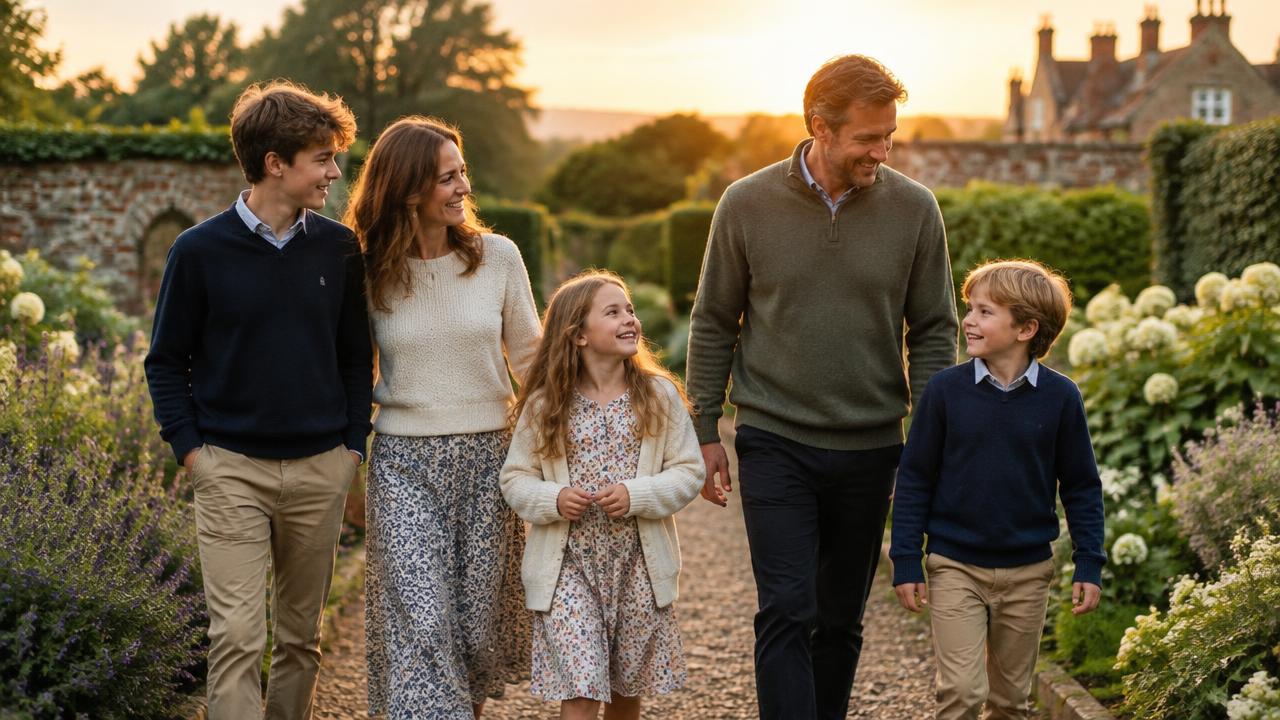
Estate planning can become more complicated when a family includes children from previous relationships, a new spouse or partner, and assets accumulated before a second marriage.
Many people want to achieve two objectives: ensuring their surviving spouse remains financially secure while protecting an inheritance for their children.
These objectives are not necessarily incompatible, but they require careful consideration.
Leaving everything outright to a surviving spouse may provide immediate security. However, it does not guarantee that the assets will eventually pass to children from an earlier relationship.
Conversely, leaving property directly to children could create financial difficulties for a surviving spouse who relies on that property as their home.
Estate planning for blended families helps balance these competing priorities through appropriate wills, ownership arrangements and, where justified, trusts.
Quick Answer: How Does Estate Planning Work for Blended Families?
Estate planning for blended families in the UK involves coordinating wills, property ownership, inheritance arrangements and potentially trusts to provide for a surviving spouse or partner while protecting children from previous relationships. A carefully drafted plan can address who benefits, when they inherit and who controls assets. The appropriate structure depends on family circumstances, financial needs and applicable inheritance laws.
Why Is Estate Planning Different for Blended Families?
A blended family may include married or unmarried partners, biological children, stepchildren, adopted children and dependants from earlier relationships.
Each person may have different expectations about inheritance.
For example, a couple entering a second marriage may each own property, savings or investments accumulated independently.
One partner may have children who are already financially independent, while the other has younger children who still require support.
The couple may want to share their lives and finances without necessarily combining every inheritance objective.
Estate planning should therefore consider more than the total value of the estate.
It should examine who owns each asset, who needs financial protection, and what should happen after the first and second deaths.
What Happens to Your Will When You Remarry?
In England and Wales, marriage generally revokes an existing will unless a relevant exception applies, such as a properly drafted will made in contemplation of marriage to a particular person.
This is especially important for people entering a second marriage.
A will previously leaving assets to children may no longer be effective after remarriage.
If the person then dies without a valid replacement will, intestacy rules may determine how their estate is distributed.
The surviving spouse could inherit a substantial proportion, potentially leaving children from a previous relationship with less than the deceased intended.
Divorce has different consequences and does not simply operate in the same way as marriage.
Practical consideration: Review your will before remarriage and arrange appropriate new documentation with legal advice.
Official guidance is available from GOV.UK on updating a will.
Do Stepchildren Automatically Inherit From a Stepparent?
In England and Wales, stepchildren do not generally inherit automatically from a stepparent under intestacy rules unless they have been legally adopted.
This distinction is important because families may consider all children equally, even where their legal relationships differ.
For example, someone may have helped raise their partner's children for twenty years but never formally adopted them.
If that person dies without a valid will, the stepchildren would not ordinarily inherit simply because of the family relationship.
Certain individuals may have potential claims for financial provision under applicable legislation, but such claims are not automatic.
A will can make specific provision for stepchildren and other intended beneficiaries.
It is also important to distinguish inheritance rights under intestacy from inheritance tax rules. Stepchildren may qualify as direct descendants for the residence nil-rate band where the relevant statutory conditions are satisfied.
Should You Leave Everything to Your New Spouse?
Leaving everything outright to a surviving spouse is common, particularly where the couple want to ensure that the survivor has sufficient financial resources.
However, it may create unintended consequences in blended families.
Once assets pass outright to the surviving spouse, they generally become part of that person's own estate.
The survivor may subsequently change their will, remarry, make gifts or use the assets for living expenses.
Even where the couple originally intended that their combined wealth would eventually pass to all their children, the first spouse's wishes may not ultimately be followed.
This does not mean outright inheritance is necessarily inappropriate.
It may be entirely suitable where the couple's objectives are aligned and there are no concerns about future inheritance arrangements.
The important point is to understand the distinction between trusting someone to follow an intention and creating legally effective provisions.
Can a Life Interest Trust Protect Your Spouse and Children?
A life interest trust is one arrangement sometimes considered for blended families.
It can allow a surviving spouse or partner to benefit from particular assets during their lifetime while specifying who should receive the underlying assets when that interest ends.
For example, a will might provide that a surviving spouse can occupy a property for life, with the deceased's share ultimately passing to their children.
How Might a Property Life Interest Trust Work?
Consider a married couple who own a home worth £700,000.
Each has children from an earlier relationship.
They want the survivor to remain in the home but also want their respective children to benefit from their share of the property eventually.
Subject to appropriate ownership arrangements and legal drafting, each person's will could potentially place their beneficial share into a trust.
The surviving spouse may receive a defined right to occupy the property.
When that right ends under the trust terms, the underlying share may pass to the beneficiaries specified by the deceased.
What Are the Limitations?
The trust must address practical matters, including:
- Responsibility for maintenance and insurance.
- Whether the property can be sold.
- What happens if the survivor wishes to move.
- Whether replacement accommodation can be purchased.
- Who acts as trustee.
- How disagreements between trustees and beneficiaries are resolved.
A life interest trust can also have inheritance tax consequences.
The treatment depends on the precise trust structure, beneficiaries and applicable rules.
It should not be assumed that establishing a trust automatically reduces inheritance tax or protects assets against every future claim.
Mirror Wills Versus Trust Wills for Blended Families
Mirror wills are commonly used by couples who want similar arrangements.
For example, each spouse may leave their estate to the other, with children inheriting after the survivor dies.
However, ordinary mirror wills are generally separate documents.
The surviving spouse can usually change their own will after the first death.
This may be appropriate for some families but can create concerns where children from previous relationships are involved.
| Consideration | Ordinary mirror wills | Wills incorporating suitable trusts |
|---|---|---|
| Provision for surviving spouse | Often outright inheritance | Can provide defined benefits or rights |
| Protection of eventual beneficiaries | Survivor may change their will | Trust terms can specify eventual beneficiaries |
| Flexibility | Often greater for survivor | Depends on trust drafting |
| Administration | Generally simpler | Trustees have continuing responsibilities |
| Tax treatment | Depends on estate and beneficiaries | Depends on trust type and circumstances |
| Costs | Often lower | May involve additional drafting and administration |
Neither approach is universally better.
The appropriate choice depends on the balance between financial security, flexibility, control and the intended inheritance outcome.
How Does Property Ownership Affect a Blended Family Estate Plan?
Property ownership should be reviewed before drafting inheritance arrangements.
In England and Wales, jointly owned property may be held as beneficial joint tenants or tenants in common.
With joint tenancy, the deceased owner's interest normally passes automatically to the surviving joint owner.
This happens outside the deceased's will.
With tenants in common, each owner has a distinct beneficial share that can generally pass under their will.
For couples considering a will trust over their respective property shares, the ownership structure may therefore be particularly important.
However, changing ownership can affect legal rights and may involve tax, mortgage or other implications.
A solicitor should assess whether any proposed change is appropriate.
What About Inheritance Tax in a Second Marriage?
Inheritance tax planning can be particularly important where spouses have children from earlier relationships.
Transfers between qualifying spouses or civil partners are generally exempt from inheritance tax, subject to applicable conditions.
Unused nil-rate bands may also be transferable to a surviving spouse's or civil partner's estate.
However, the interaction between inheritance tax allowances and trust arrangements requires careful consideration.
The Residence Nil-Rate Band
The residence nil-rate band can provide an additional inheritance tax allowance where a qualifying home passes to eligible direct descendants.
For 2026/27, the standard residence nil-rate band remains £175,000, subject to qualifying conditions and tapering for larger estates.
Stepchildren can qualify as direct descendants for this purpose where they meet the statutory definition.
However, not every trust arrangement allows the residence nil-rate band to apply.
The type of trust, entitlement of the beneficiaries and value of the estate all matter.
An estate plan should therefore consider inheritance tax alongside family protection rather than assuming that one arrangement will achieve both objectives automatically.
A Practical Estate Planning Example
Consider a couple in their sixties who have recently married.
The husband has two adult children from his first marriage.
The wife has one adult daughter.
They jointly own a property worth £800,000 and hold separate savings and pension arrangements.
Both want the surviving spouse to remain financially comfortable.
However, each also wants their own children to receive a defined inheritance.
A planning review could consider:
- Their current wills and the effect of remarriage.
- The legal and beneficial ownership of the property.
- Whether outright inheritance reflects their wishes.
- Whether a life interest trust is appropriate.
- How savings and pensions should be treated.
- The likely inheritance tax implications.
- Who should act as executors and trustees.
- How the arrangements would work if the survivor needed to move or fund care.
The solution might involve a combination of outright gifts, trust provisions and separate beneficiary arrangements.
There is no requirement that every asset be treated identically.
The example illustrates why blended family planning is often more effective when assets are considered individually.
How Can You Reduce the Risk of Inheritance Disputes?
Inheritance disputes can arise when beneficiaries have different expectations or believe that arrangements are unfair.
Blended families may be particularly sensitive to these concerns.
A surviving spouse may need financial security, while adult children may feel that assets accumulated by their parent should remain within their side of the family.
Clear documentation can help, but communication also matters.
Where appropriate, families may consider discussing broad intentions with relevant beneficiaries.
A letter of wishes can sometimes explain the reasoning behind particular arrangements, although it does not generally replace binding legal provisions.
Trustee appointments should also be considered carefully.
Appointing individuals with competing interests can create difficulties, particularly where decisions involve property occupation, expenditure or distributions.
Independent professional input may be useful where family relationships are strained.
What Other Documents Should Blended Families Review?
Wills and trusts are important, but they are not the only relevant arrangements.
A coordinated estate plan should also consider lasting powers of attorney, pension nominations, life assurance policies and any existing financial agreements.
For example, pension death benefits may be governed by scheme rules and trustee discretion rather than the terms of a will.
An outdated nomination could therefore create an outcome that differs from the couple's current intentions.
Similarly, lasting powers of attorney should reflect who each person trusts to manage financial or welfare decisions.
This may be a spouse, adult child or another suitable individual.
Related Telmar article: Lasting Power of Attorney Explained.
When Should a Blended Family Review Its Estate Plan?
A review is particularly important following remarriage, divorce, bereavement, the birth of children or a substantial change in wealth.
Other relevant events include a house move, retirement, changes in health and alterations to family relationships.
Trust arrangements should also be reviewed where legislation or tax guidance changes.
For families with complicated inheritance objectives, regular professional reviews can help identify inconsistencies before they create difficulties.
How Can Professional Estate Planning Advice Help?
Blended family estate planning involves balancing legal rights, financial needs and personal relationships.
A document that appears straightforward may have consequences that are not immediately obvious.
For example, changing property ownership to support a trust arrangement may affect how assets pass on death and how the surviving spouse can use the home.
Professional advice can help families understand the available options and their limitations.
At Telmar Estate Planning, a useful starting point is identifying the family's objectives, existing ownership arrangements and the needs of each intended beneficiary.
Where specialist legal, tax or financial advice is required, appropriate professional coordination is important.
Conclusion: Protecting Your Spouse and Children Requires Careful Balance
Estate planning for blended families is not about choosing between a spouse and children.
It is about considering how both can be provided for in a way that reflects the family's circumstances and intentions.
Wills, trusts, property ownership and beneficiary arrangements can all contribute to that objective.
However, every structure involves trade-offs between flexibility, control, administration and tax treatment.
A coordinated estate plan can help families make those decisions with greater clarity and reduce the risk of unintended inheritance outcomes.
Authoritative External References
GOV.UK — Making a Will: Write Your Will
https://www.gov.uk/make-will/writing-your-will
Official guidance identifying second spouses, children from earlier marriages and other complex family circumstances as reasons to consider professional advice.GOV.UK — Making a Will: Update Your Will
https://www.gov.uk/make-will/updating-your-will
Official guidance on the effect of marriage and major life events on existing wills.HMRC — Residence Nil-Rate Band Guidance
https://www.gov.uk/guidance/inheritance-tax-residence-nil-rate-band
Detailed guidance covering direct descendants, stepchildren, trusts, qualifying property and inheritance tax allowance conditions.
Ready to Plan Ahead?
Book a consultation with our team and take the first step towards protecting your wealth.
Related Reading
Frequently Asked Questions
Ready to Protect Your Future?
Book a consultation today and take the first step towards peace of mind for you and your family.